
Social story topics
Social story: Waiting my turn
Waiting is empty time with no end in sight, and for many autistic and neurodivergent students empty time is the hardest kind. The canteen line, the turn on the computer, the teacher helping someone else: each one is a stretch of not knowing how long, with nothing to do but feel it.
This story explains why waiting happens, how to tell roughly how long, what to do with the time, and how the student will know when it is their turn. Pair it with a visual timer or a "waiting" card the student can hold, so the wait has an object and an end.
A sample story
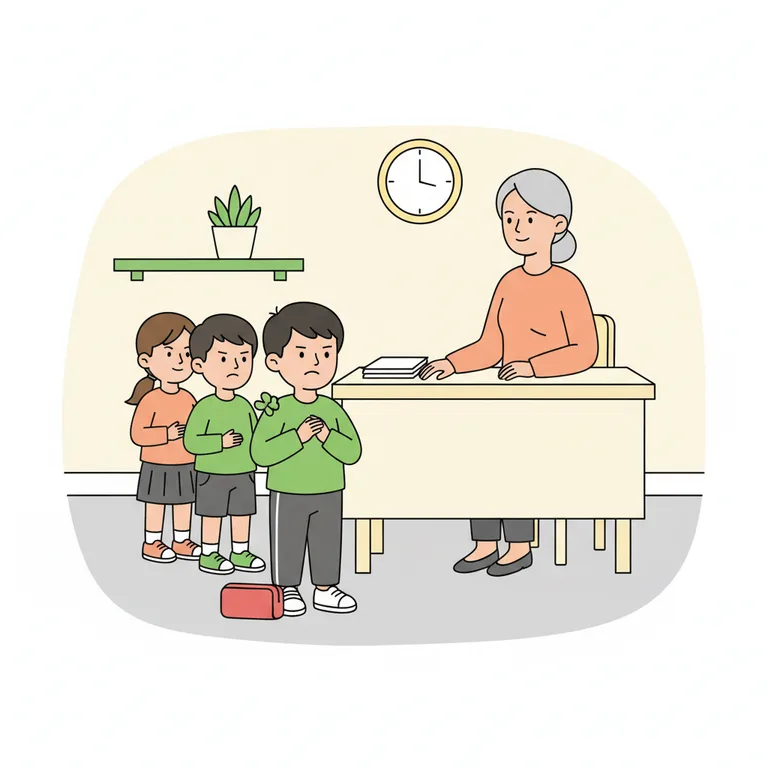
Waiting My Turn
- 1Sometimes I have to wait for my turn.
- 2My teacher knows that waiting can feel hard.
- 3While I wait, I can hold my pencil case and count to ten.
- 4I wait for my turn, and I feel proud when it comes.
A sample made with HandsOnTop. Yours is written for your student.
Make this story for your student
The situation is filled in. Add a name and what they love, then click Make it — the first one is free.
Free to try · no card needed.
Tips for using it
- Give the student something to do or hold while they wait, and name it in the story.
- Show the wait with a visual timer or a numbered queue card where you can.
- Say roughly how long, even if it is only "a few minutes".
Common questions
How is this different from taking turns?
Taking turns is about the rules of a game. This story is about the waiting itself, anywhere it happens: lines, the computer, the teacher being busy.
Can I give the student a waiting card?
Yes. A card that says "I am waiting" with a picture gives the student something to hold and the teacher something to acknowledge. The visuals tool can make one in a minute.
Does the story help with lining up?
It helps with the waiting part. The lining-up story covers the specific moves of the line itself; many teachers use both.