
Social story topics
Social story: Stopping when the timer ends
Stopping something you love because a timer said so is one of the hardest asks in a school day. The game or the drawing is not finished, the stop comes from outside, and the next thing may be less fun. For many autistic and neurodivergent students the end of the timer is where the big reactions happen.
This story sets out the sequence: a warning, the timer sound, stopping, and what comes next, and it names the frustrated feeling as normal. Use a visual timer the student can see counting down, and a first-then board so the next thing is already known.
A sample story
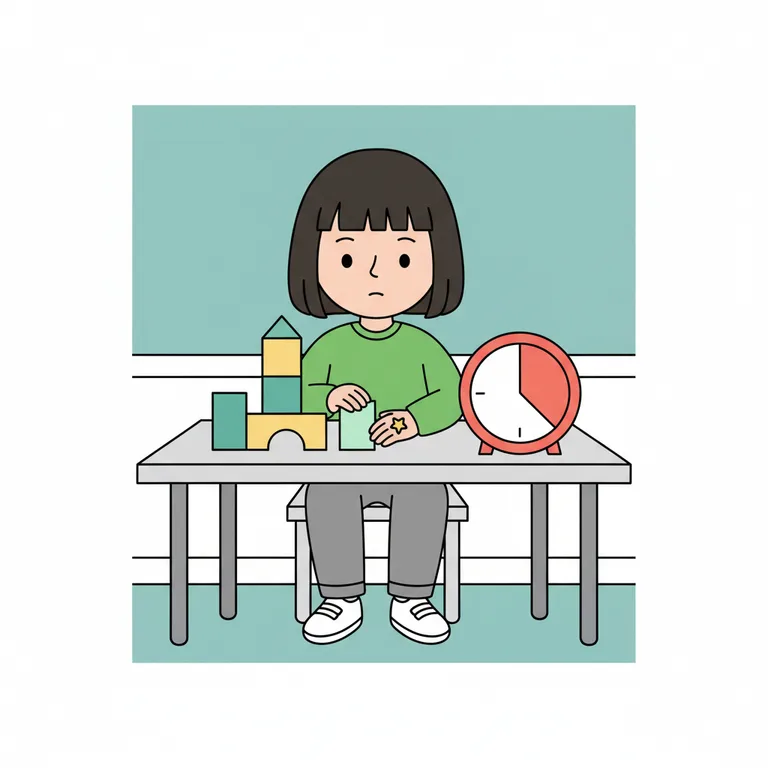
When the Timer Stops
- 1I am doing an activity when a timer is running.
- 2Then the timer makes a sound and stops.
- 3My teacher knows I need to hear that the time is finished.
- 4I can put down what I am holding and look up.
- 5I stop when the timer ends, and I feel ready for what is next.
A sample made with HandsOnTop. Yours is written for your student.
Make this story for your student
The situation is filled in. Add a name and what they love, then click Make it — the first one is free.
Free to try · no card needed.
Tips for using it
- Use a visual timer the student can watch, not only a sound.
- Always give a two-minute and a one-minute warning, and put them in the story.
- Show what comes next on a first-then board before the timer starts.
Common questions
Does the timer make it worse for some students?
For a few, watching the countdown adds worry. Try a timer that shows time as a shrinking colour block and shorten the activity rather than the warning.
Can the story promise the activity will come back?
Only if it is true. If the student can return to the game later, say exactly when. A kept promise builds trust; a broken one undoes the story.
How do I pair it with a visual?
A first-then board works well: the timed activity on the left, the next activity on the right. The next-step card after the story opens the visuals tool with the same topic.