
Social story topics
Social story: Taking a break in the calm corner
A calm corner only works if the student knows when to use it, how to get there without a fuss, what to do once there and how to come back. Without that, it becomes either a punishment or a place to hide for the whole lesson. For autistic and neurodivergent students the return is often the hardest part.
This story covers the whole loop: noticing the need, the signal to the teacher, the walk, what is in the corner, how long, and coming back to the task. Read it when you set up the corner and make a small visual of the same steps to keep in the space itself.
A sample story
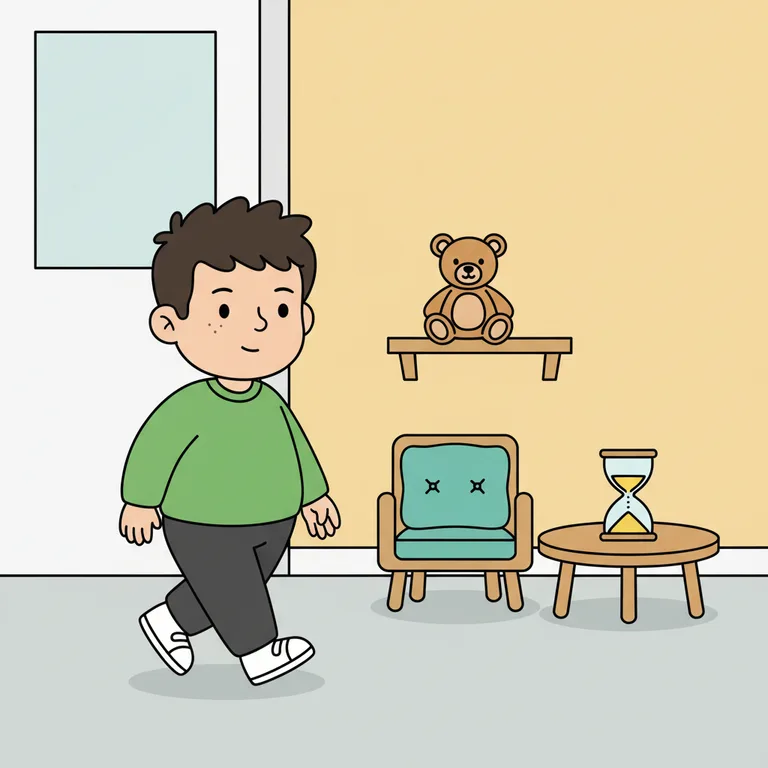
My Calm Corner Break
- 1Sometimes my body feels too full in class.
- 2My teacher knows a break in the calm corner can help my body feel less full.
- 3First, I walk slowly to the calm corner and sit down in the small chair.
- 4I sit in the calm corner until the sand timer runs out.
- 5Then I walk back to my table, and my body feels calmer and ready.
A sample made with HandsOnTop. Yours is written for your student.
Make this story for your student
The situation is filled in. Add a name and what they love, then click Make it — the first one is free.
Free to try · no card needed.
Tips for using it
- Agree a signal for going and a way to know when to come back, such as a sand timer.
- Keep the corner simple and the same, so it stays calm.
- Praise the coming back, which is the brave part.
Common questions
How long should a break be?
Short and visible: a five-minute sand timer is common. Put the real length into the story so the student knows what to expect.
Is the calm corner a reward or a consequence?
Neither. The story describes it as a tool, like a drink of water, that anyone can use. That framing is what keeps it working.
Can I make the matching visual?
Yes. A small card set of the calm strategies for the corner itself is one click from the story result.