
Social story topics
Social story: Losing a game
Losing brings a sudden, physical feeling that arrives faster than any thinking. For many autistic and neurodivergent students the rule "it is only a game" does not help in the moment, because the feeling is real and the ending was not the one they were expecting.
This story names the feeling, describes what the student can say and do when it comes, and makes the case in a child’s terms that playing is the point. Read it well before a game and rehearse the losing script in a low-stakes game you lose on purpose.
A sample story
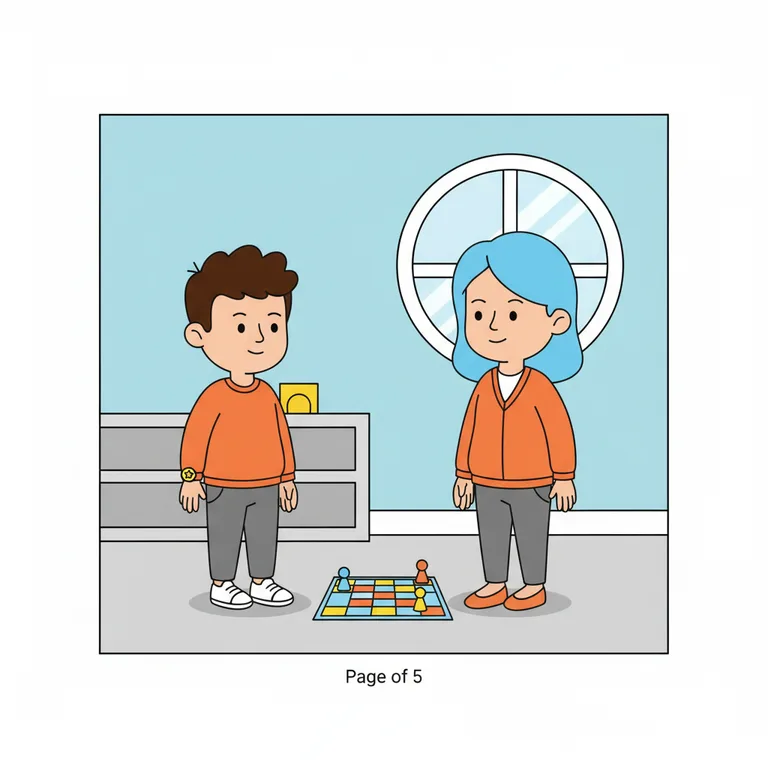
When I Lose a Game
- 1Sometimes I play a game and I lose.
- 2Losing a game can feel bad inside my chest.
- 3My teacher knows losing a game can feel hard.
- 4I can sit still, take a slow breath in, and let it out.
- 5I lost the game, and I stayed calm.
A sample made with HandsOnTop. Yours is written for your student.
Make this story for your student
The situation is filled in. Add a name and what they love, then click Make it — the first one is free.
Free to try · no card needed.
Tips for using it
- Rehearse losing in a quick game the adult loses first, with the script from the story.
- Agree what the student will say and do, and keep it short.
- Praise the calm, not the result.
Common questions
Does the story say winning does not matter?
No, because to the student it does. It says the feeling is normal, shows what to do with it, and points at the next game rather than pretending the loss was fine.
What age is this for?
Any primary age. Set the age before you generate and the reading level adjusts, so an older student gets a story that respects them.
Can it include a calm-down strategy?
Yes. Name the strategy the student already uses, such as three slow breaths or a walk to the drink tap, so the story matches real life.