
Social story topics
Social story: Saying hello to someone new
Saying hello is a tiny script with a lot of unwritten rules: when to speak, how loud, where to look, how long to stand there, what to do when they answer. For autistic and neurodivergent students the moment can be paralysing, and the silence that results is read by others as unfriendly when it is anything but.
This story gives the student a short, workable script and takes the pressure off eye contact. It describes how a hello begins and ends, so the student knows when they are done. Rehearse it with a familiar adult, then a familiar peer, before it is needed with a stranger.
A sample story
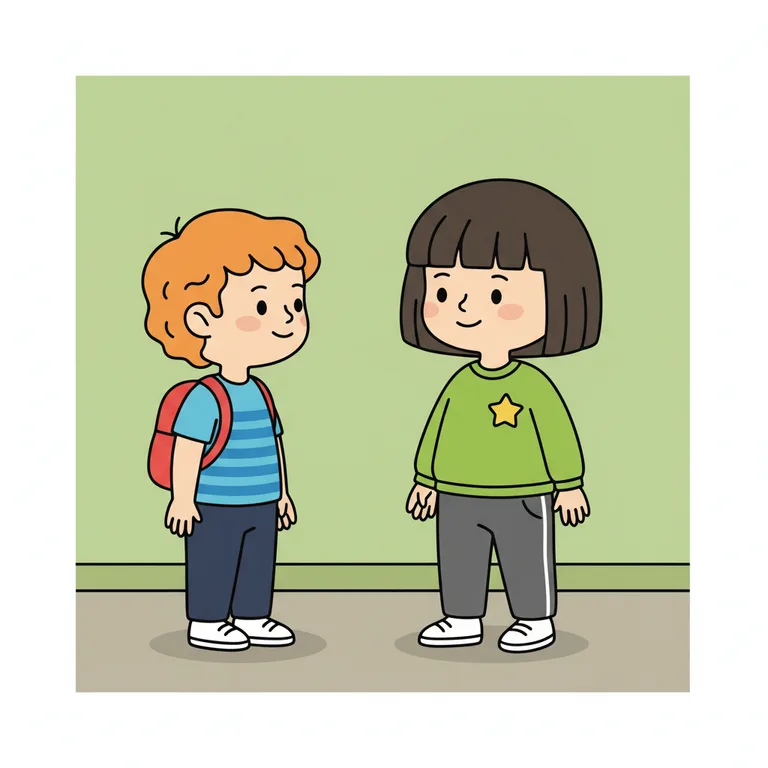
Saying Hello to Someone New
- 1Sometimes I meet someone new at school.
- 2The new person does not know my name yet.
- 3Saying hello helps the new person know I am friendly.
- 4I look at the new person, wave my hand, and say the word hello.
- 5I say hello, and I feel good inside.
A sample made with HandsOnTop. Yours is written for your student.
Make this story for your student
The situation is filled in. Add a name and what they love, then click Make it — the first one is free.
Free to try · no card needed.
Tips for using it
- Keep the script to three or four words and let the student choose them.
- Do not insist on eye contact; looking at a face or a shoulder is fine.
- Practise with a known adult first, then a buddy.
Common questions
Does the story demand eye contact?
No. It describes looking toward the person, which can mean their face, their shoulder or their shoes. Forcing eye contact makes the hello harder, not easier.
Can it be about a specific person?
Yes. If a new teacher or a new classmate is arriving, put their name in the topic and the story becomes a rehearsal for that exact meeting.
What if the student does not speak?
Write the student’s real greeting into the story, such as a wave or a card. The story should describe the hello this student can give.